The first thing I did in Costa Rica was arrive with my very Castilian school Spanish. I took it for five years and assumed that the version I had been taught (full of vosotros) would carry me through the bus stations. Consider me surprised when I arrived and very quickly realised that Costa Ricans speak fast, drop consonants and have an entire emotional register that runs through the phrase pura vida. That phrase, for an outsider, is just two words but for Costa Ricans it is a complete worldview.
Pura Vida
Pura vida, literally "pure life", is the single most common phrase in Costa Rica. It is the answer to "how are you," "thanks,", "don't worry about it” and “this is excellent." It is what the bus driver says when he takes you up even though you are clearly at the wrong stop. It is what the woman at the fruit stand says when you point at something and ask what she sells. By the end of the third week, I was using it as well since the joy was so noticeable when a foreigner used it.There are other things about Costa Rican Spanish that are very different from my school Spanish. The use of vos instead of tú is a feature that is shared with Argentina and parts of Central America but absent from Spain and Mexico and the phrase tú tienes turns into vos tenés , with a stress shift that took me an endless number of conversations to get right. The diminutive ending -tico (instead of the more common -ito) is so characteristic that Costa Ricans are nicknamed Ticos after it and a momentico is a little moment and a phrase you hear roughly forty times a day.
What I did not expect was the complete dominance of Spanish across Costa Rica since it is a relatively recent addition to the country. Still, there are eight indigenous languages still spoken in the country: Bribri, Cabécar, Maleku, Boruca, Guaymí, Térraba, Chorotega and Huetar. Most of them are critically endangered and several have fewer than a thousand speakers left. Unfortunately, I never knowingly heard any of them. The speakers live on reservations in the south and on the Caribbean coast and the languages do not appear anywhere in public life.
How to almost step on a snake
Halfway through the trip, I joined four strangers from my hostel for a hike up Cerro Chato which is a dormant volcano with a crater lake at the top. The trail had been officially closed for five years but our hostel owner told us another way to get up there. We followed his suggestion and spent three hours hiking up a path that was less a path and more of a suggestion. The forest got denser as we climbed and the ferns got taller and the mud got deeper. By the time we reached the crater rim, all five of us were caked in mud up to mid-thigh, including our faces. The lake at the bottom was jade green and roughly ten degrees Celsius. Since we were sweating form our hike up there, we decided to swim in it for half an hour.
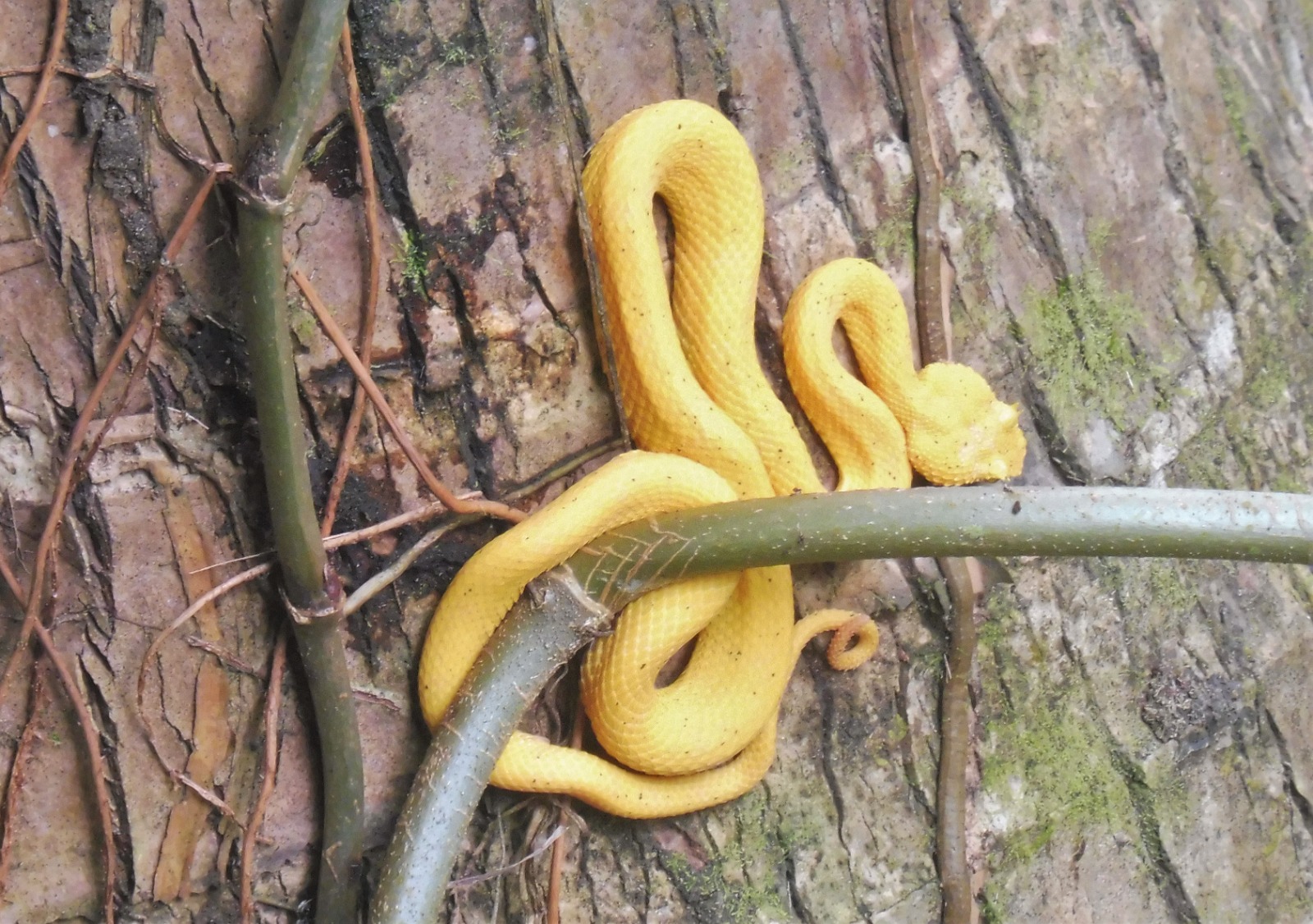
On the way back, we took a slightly different route to see a waterfall that we had heard of. I was walking ahead of two friends down the forest trail when I saw, at the very edge of my next footstep, something move, the motion was very quick. I stopped immediately, probably more out of instinct than anything else, after all I have heard about the venomous snakes. Looking down, I saw a snake about as long as my arm with a brown pattern and clearly thinking about striking the threat above or not. It chose not to and, instead, flowed sideways into the leaves and disappeared in roughly two seconds. I spent the next ten minutes shaking and giggling from the shock. Later research suggested it was a Godman's pit viper, whose bite is venomous but rarely fatal which somehow does not provide quite as much comfort as you would hope.
Costa Rica has some of the highest snake-bite rates in Central America. According to one of the hostel owners, most of the bites happen to plantation workers on banana, coffee or palm plantations since they walk into the brush in inappropriate clothing and then often do not go to a hospital because they are undocumented Nicaraguan migrants and the hospital is expensive. The country has antivenom for nearly every species which is freely available and still people die because they cannot get to it.
Tree chicken and other names
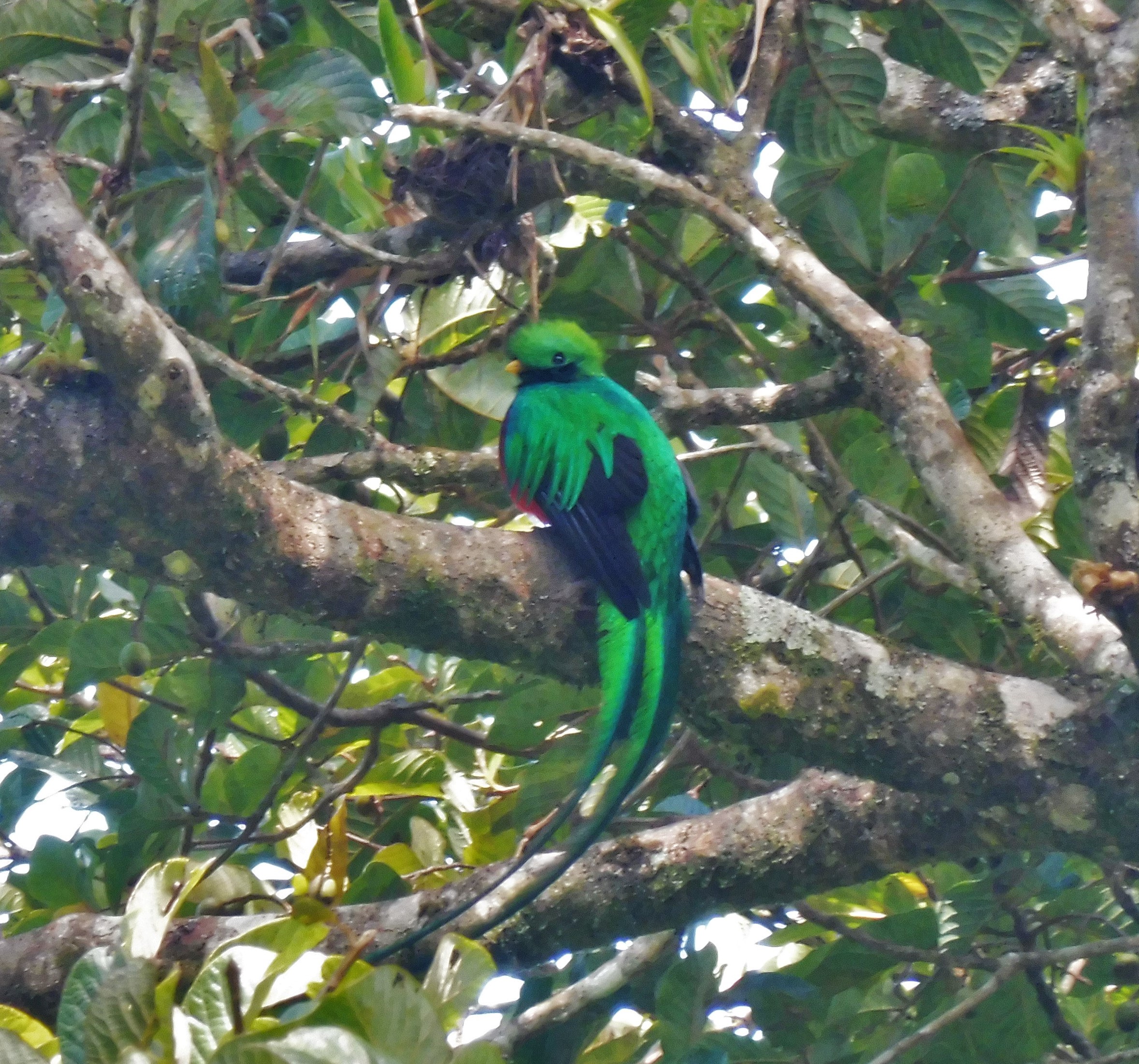
The first time, I went to the Costa Rican rainforest it fascinated me how few of the plants I could name. Almost every single tree was a new tree and every bird call belonged to a species I had never heard of.I started trying to remember all the animals and trees that I encountered. Perezoso — sloth, Mono congo — howler monkey , the loudest land animal in the Americas, whose call sounds like a dinosaur in distress and carries five kilometres through the forest. Pizote — coati which is a long-nosed raccoon-relative that travels in family groups and is very interested in your unattended papaya. And of course garrobo — green iguana , which the locals called gallina de palo (tree chicken) because they used to eat them. What impressed me most was the Quetzal which is a long-tailed bird so beautiful that the Aztecs and Maya considered killing one a capital offence. I saw two on a single afternoon in a cloud-forest reserve while they were sitting in an avocado tree and snacked on it.
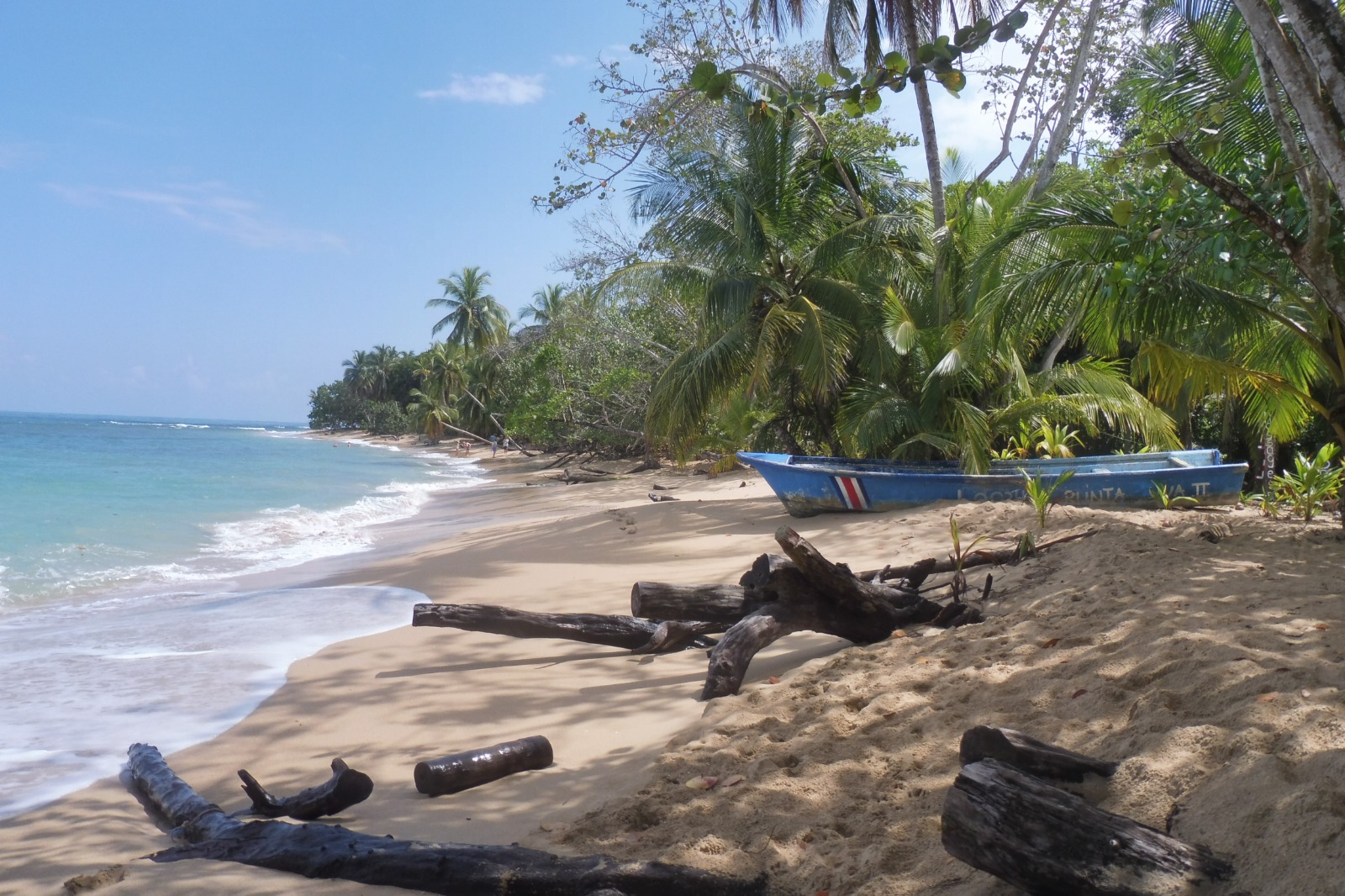
Costa Rica’s landscapes are very diverse across this rather small country so every new place also brought new animals such as leafcutter ants in Puerto Viejo that carry chunks of leaf along the forest floor in slow columns and whose path you cross constantly without realising. I saw a poison dart frog in Tortuguero, a two centimetres long, fluorescent red frog with electric-blue feet that was sitting on a wet leaf shouting at the sky in a voice many sizes too big for its body. In Drake Bay, I was lucky enough to saw manta rays jumping out of the Pacific while a Costa Rican man on the trail behind me gestured frantically and shouted mira mira mira until I understood that the dark shapes flapping out of the water and back in were not, as I had assumed, dolphins.
The cloud forest
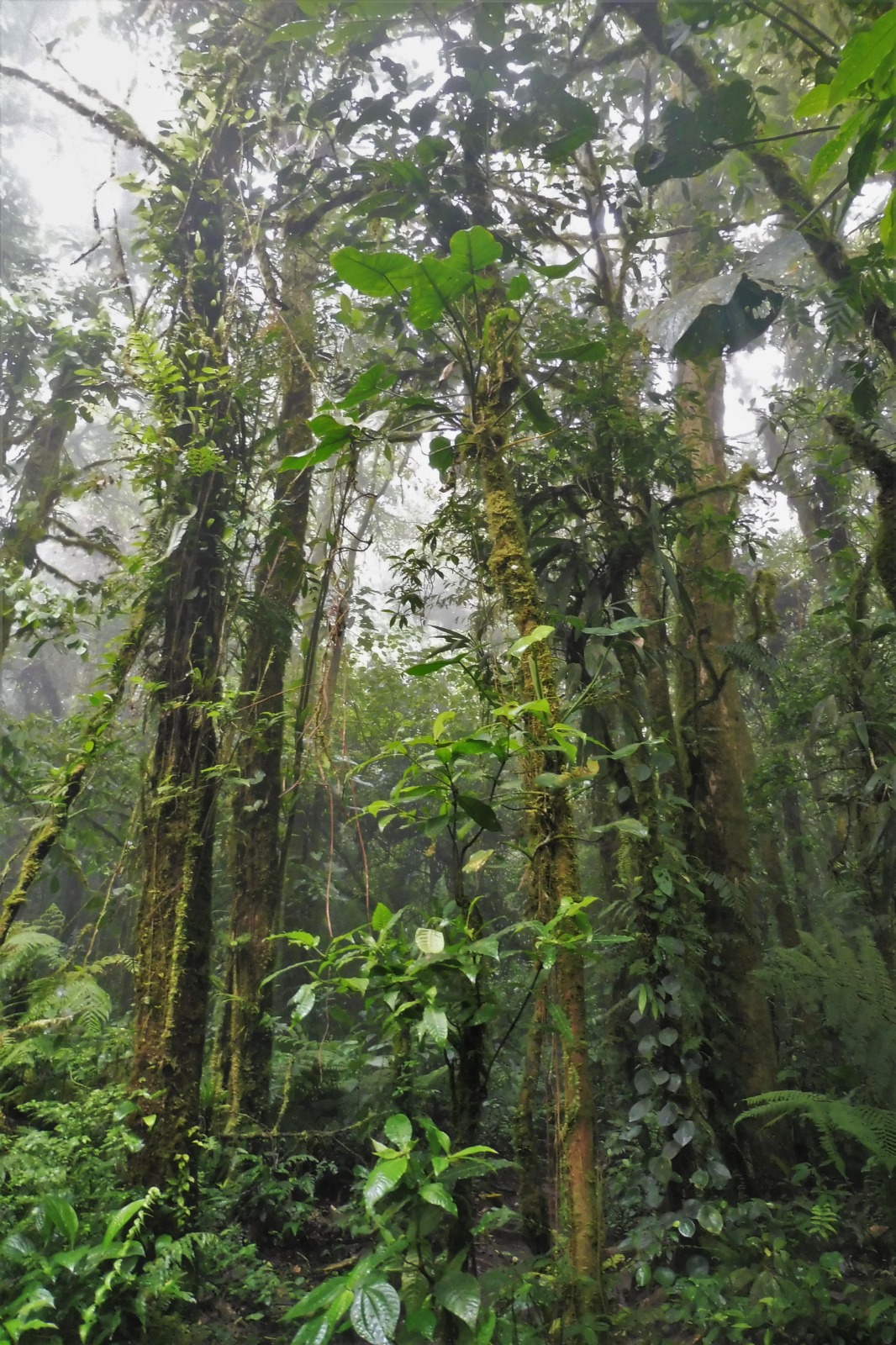
In the last week of the trip, I went up to Monteverde and walked into the Santa Elena cloud forest at 1800 metres of altitude, where the clouds physically sit inside the trees. It rained the entire time, lightly, which lend a special ambiance to the forest. It was so quiet that the loudest sound was the dripping of water from one leaf to the next leaf below it. Every branch was wrapped in moss thirty centimetres thick and the ferns grew to the height of houses. There were trees so completely overgrown by other plants that the original tree was no longer really a tree, just a shape inside a web of plants.
What I had not expected was how quiet it was. The lowland rainforest I had spent the previous month in was constantly making noise. The cloud forest, by contrast, sounds like a cathedral underwater. Sometimes a single bird would call from very far off and the call would arrive at me already softened as though the moss had eaten most of the sound on the way.
I walked for two and a half hours and did not pass another person. At one point the trail opened onto a small wooden viewing platform where, in clear weather, you could apparently see Lake Arenal and the volcano on the far side. I saw clouds, moving slowly. I stood there for a long time and just enjoyed the serenity of the moment.
The cloud forest really was the perfect end for my trip since it made me think about how the moss has been growing on those branches for decades and how the clouds have been doing what the cloud is doing, in roughly that exact spot, for as long as the mountain has existed. The trail kept going past the viewing platform, deeper into the forest but I had to turn around to walk back the way I came.